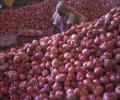
India's potato and tomato production could be marginally less in 2021-22 as compared to the previous year while onion output could be almost 17 per cent more than last year. This was stated in the first advance estimate of horticulture production released on Monday. The government also said total horticulture production is estimated to be at 333.3 million tonnes, a slight decrease of about 1.35 million tonnes (mt)?(or 0.4 per cent) over 2020-21.
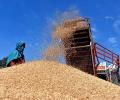
A decision to tap the 30 countries for exporting wheat was taken at a meeting of the commerce ministry on Thursday.

The Russia-Ukraine crisis, along with general bullishness in agricultural commodities, has ensured that after a fairly long time, most of the 24 commodities for which the Centre declares the minimum support price (MSP) are trading above it. The exceptions here are chana or gram and a few varieties of pulses. This might gladden the farmers, especially those who are still holding on to their stocks from the previous kharif harvest or are harvesting the latest rabi crop. But this could stoke retail and wholesale inflation.
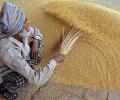
India's opening stocks of wheat in the central pool are expected to be 19.5-20 million tonnes as on April 1, 2022, the lowest in the last three years, but much higher than the normative level required for maintaining a buffer and strategic reserve, trade and market sources said. In accordance with the buffer and strategic reserve norms, India should have a wheat stock of 7.5 million tonnes in the central pool as on April 1 each year and this year's stocks, though the lowest in the last three years, will still be over 160 per cent more than what is required. On the export front, both government and trade sources are unanimous that this year (FY22) they will be 7-7.25 million tonnes, a record, while in the next financial year, they might touch even 10 million tonnes if the current momentum is maintained.

India's wheat exports could touch a new record of 10 million tonnes in 2022-23, up from a record seven million tonnes in the current financial year, if global market conditions remain choppy and no curbs are imposed on outbound shipments. That is the bullish estimate by officials from global trading firms and market watchers who say the Russia-Ukraine crisis has not only attracted global buyers to India but also pushed the price of Indian wheat from around $320 per tonne (FOB) to over $360 per tonne in less than 10 days. Food secretary Sudhanshu Pandey told reporters that wheat exports till February-end have already reached 6.6 million tonnes and by the end of March, outbound shipments will reach seven million tonnes.
India is looking to tap its diplomatic missions abroad to enable grain exporters in the country to ship out wheat and corn as supplies from Russia and Ukraine are expected to remain disrupted for some time to come. Between the two items, pushing for wheat is easier because of a huge domestic surplus. "We are hand holding our exporters and support from various Indian missions abroad is also being channelised accordingly," a senior government official said. Global wheat prices have jumped since the Ukraine crisis started, with wheat futures in the US reaching their highest levels since 2008.

In the three months leading up to the Assembly elections, Chief Minister Yogi Adityanath's government distributed over 1.4 million tonnes (MT) of wheat, 0.95 MT of rice, 0.10 MT of chana (gram), 101.9 million litres of soybean oil and 100,000 tonnes of salt as free ration. This was part of the Covid relief package, officials said.

Though early days, meteorologists point towards a neutral La Nina during the initial phase of the four-month monsoon season this year that starts from June. If this holds true, by the time the rains hit the mainland, it could mean there would be one less reason to worry about the prospects of the monsoon this year. Weathermen said making any accurate prediction of how El Nino will behave and what impact it can have on the progress and distribution of rains is difficult to say at this point. A clear picture will emerge around late May or early June.

The Centre has, perhaps for the first time, decided to provide funding support to farmer-producer organisations, krishi vigyan kendras, custom hiring centres, and individuals for purchasing them.

The government's food subsidy in the ongoing fiscal year is expected to be a little less than Rs 4 trillion.
Among the key demands of agitating farmers has been a legal guarantee on minimum support price (MSP). The protest reached a crescendo when thousands of farmers from Punjab and elsewhere marched towards Delhi late last year and decided to block the main entry points once they were denied entry. The Centre, on its part, held 11 rounds of discussions with the protesters and even offered to amend some of the provisions without much success. With now one of their chief demands met, farmers have now moved on to force the government to concede on MSP.
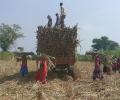
Nitin Tyagi is a young farmer in Budhagaon village of Baghpat district of Uttar Pradesh. A few years ago, Tyagi left his fairly lucrative job in the medical industry and shifted base to his ancestral village to look after his land and property. He opened a small shop selling farm inputs in the village and also started taking a greater interest in agricultural matters which had so far been looked after by his father and uncles. Tyagi and his brothers primarily grow sugarcane, potato and wheat on nearly 10 acres of land with sugarcane taking up most of his time and effort. Being one of the most important and lucrative cash crops of the region, sugarcane is directly linked to the fate of millions of farmers in west UP and with it, the electoral fortunes of political parties seeking their votes in the coming assembly polls.
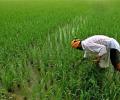
Gross value added in agriculture and allied activities clocked a healthy growth rate of 4.5 per cent at constant prices in the second quarter of FY22, up from 3 per cent during the same period last fiscal year and 3.5 per cent in Q2 of 2019-20. In the first quarter of FY22, gross value added in the sector was also 4.5 per cent. Growth in current prices was also a healthy 7.9 per cent in July-September 2021-22, up from 7.3 per cent in the same quarter last fiscal year. It was slightly less than the 8.7 per cent of the second quarter of 2019-20.
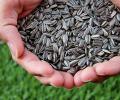
The Centre, after the repeal of the farm Acts, may bring in another important piece of legislation concerning farmers in the form of the long-pending Seeds Bill. This will be in the ogoing winter session of Parliament. Sources said the draft Seeds Bill, in the way it was prepared in 2019, sought to overcome several of the shortcomings of the Seeds Bill of 2004, which was proposed to replace the Seeds Act of 1966. However, the 2004 Bill could not be cleared owing to deficiencies in it.

'As far as contract farming is concerned, we already have a model Act and states will be encouraged to adopt them.'

It's always been a struggle for economists and statisticians to forecast India's gross domestic product (GDP) correctly, and say where the economy is headed before the official numbers come out. If estimating the GDP is tough, forecasting it in real time is complicated. It involves looking at tens of indicators, such as industrial production, electricity consumption and exports, to arrive at a number.
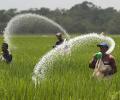
Enthused by rising potato prices after a prolonged slump, Pradeep Sharma was planning to sow the crop on his 15-acre farm near Agra slightly earlier than usual. The delayed departure of the southwest monsoon also prompted his decision, since the good soil moisture would have saved at least one initial irrigation. But the acute shortage of diammonium phosphate (DAP), a crucial nutrient ahead of the sowing season for potatoes, nipped those hopes in the bud. DAP is the second-most used fertiliser in the country after urea.
In order to check the abnormal surge in edible oil prices during Diwali festivities, as many as 18 states are in the process of imposing stock holding limits on oilseeds and edible oils after being empowered by the Centre for doing so. Of the 18 states that are in the process of imposing stock limit on my edible oils apart from UP, include Rajasthan, Gujarat, Maharashtra, Odisha, Kerala, Jharkhand, Chhattisgarh, Andhra Pradesh, Tamil Nadu, Tripura and the Union Territory of Chandigarh. Of the 18, Uttar Pradesh, has already imposed stock limits on edible oils, the Centre was informed with as many as 23 states to discuss ways and means to ensure further easing of edible oil prices.

There's no place like home, but even for the affluent buying one in India is difficult. On top of that, the coronavirus pandemic-now in its eighteenth month-has made life uncertain. A hopeful thing is buying a house looks alluring as loan interest rates fall below 7 per cent, their multi-decadal lows. The slow decline in GDP growth after demonetisation, followed by the economic shock caused by Covid-19 waves, has hurt us unevenly.

Retail sales of cars are back to January 2018 levels in August 2021. Two-wheeler retail sales are 22 per cent lower, nearly four years down the line.
 © 2026 Rediff.com - Investor Information - Advertise with us - Disclaimer - Privacy Policy - Sitemap - Feedback - About us - Terms of use - Grievances